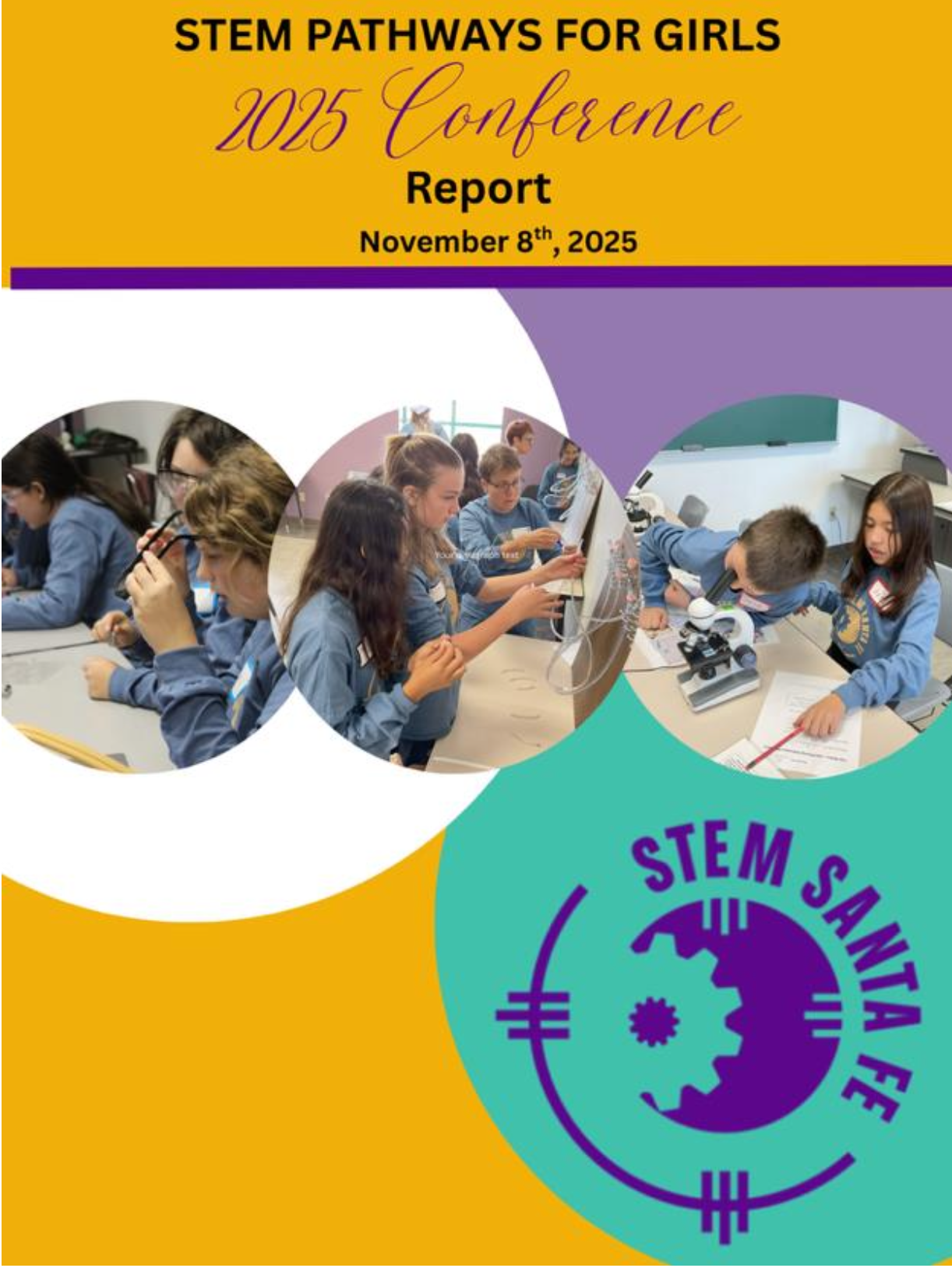
9:00am - 9:30am: Check-In & Ice-Breaking Activities | Campus Center
9:30am - 10:30am: Welcome & Keynote Address | Jemez Rooms
10:30am - 11:45am: Workshop Session 1 | Assigned Classroom
11:45am - 12:45pm: Lunch and Group Photo | Campus Center
12:45pm - 2:00pm: Workshop Session 2 | Assigned Classroom
2:00pm - 4:00pm: Raffle & STEAM Fair | Jemez Rooms
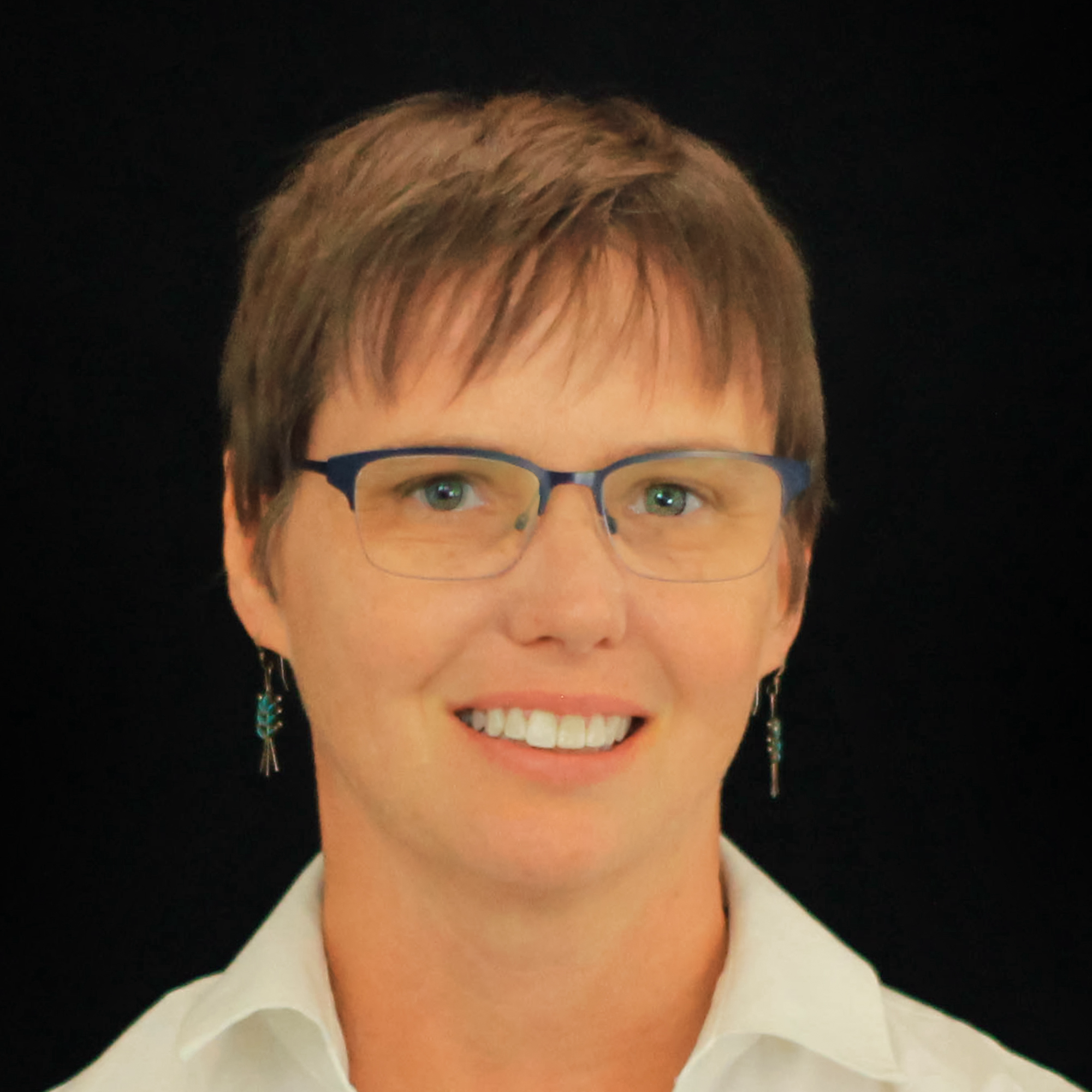
Dr. Diane Oyen is a Computer Scientist and Team Leader of Artificial Intelligence Foundations at Los Alamos National Lab (LANL). She received her B.S. degree in Electrical Engineering from Carnegie Mellon University and her Ph.D. in Computer Science from the University of New Mexico. At LANL, Diane develops machine learning methods for accelerating scientific discovery. She has applied these methods to analyze ChemCam observations on Mars, accelerate physics simulations, characterize malware for cybersecurity, and analyze information in technical images. Before joining LANL, Diane designed computer hardware in the semiconductor industry and taught high school math in Albuquerque. For fun, she has visited all 50 states and 5 continents. She can usually be found outside hiking and running; or inside remodeling her house.
A ) Fun with Computers, Music, & Robots
with Teri Roberts
Learn the simple secret of how digital computers work. Explore visual computer program construction. Create musical arts. Run some robots. See how they work and are programmed.
B ) Investigating Electricity
with Susan Webster and Molly Quay de la Valee
Students will investigate how batteries supply energy to circuits. First, they will create a circuit that contains a wet-cell battery. Next, after learning to draw schematics for circuits, they will create a circuit that powers an electric fan. Finally, students will measure the difference between a single-battery circuit and a compound battery circuit using a voltmeter.
C ) Grow Your Own Ecosystem
with Ty McCormick
Students will learn the basic processes of plants and their environmental needs and then will each construct a terrarium to fulfill the needs of the plant.
D ) Magnifying Curiosity
with Adriana C. Salazar Coariti
In this interactive workshop, students become "science detectives" to explore the invisible world around them. The session begins with a dynamic multimedia presentation where students learn the core principles of optics. Following the presentation, students engage in a hands-on "Guess & Draw" exercise as they are shown mysterious, highly magnified images of everyday objects, form a scientific hypothesis about what the objects are, and draw their predictions. Students then test their hypotheses by building these fully functional paper microscopes, which they use to observe real samples like plant cells and fabric.
E ) Hungry Hungry Predator!
with Harpreet Batther, Stephanie Sutton-Dauber, Jennifer Pentz, Zoe Taylor
The big question that workshop strives to answer is: "Why did life go from single cells to groups of cells working together?" During this workshop, students will test if being multicellular actually protects yeast from predators by comparing single-celled yeast to multi-celled (cluster) yeast see which survives better when there's something trying to eat them.
F ) Waves Unleashed
with Zhangxi "Jesse" Feng and Jacob Zachariah Williams
We devise three waves experiments using water, sound, and light where the students will spent 15 minutes at each of the three wave stations. Making their choices on shapes of objects and other variables then write down their observations of water waves interacting with shapes, sound waves forming shapes on a saran wrap model of a drum surface, and a supervised laser pattern through slits.